

3 Tips to Practicing Effectively
Part 1: How to make the most of your time to get real results
Part 2: What and how to practice to create momentum
Part 3: The secret to progressing quickly
Thank you for joining me for this 3 part series on practicing! You are going to get excited about practicing and seeing some real results 🙂
You may want to check your email spam folder to be sure the extra material gets to you!
Part 1 : How to Make the Most of Your Practice Time
So let's jump right in. We are going to work on creating a mindset where we want to play guitar. Where we want to pick it up and practice. How do we do that?
By working through a system that gives us immediate results. The material we choose and the order in which we choose it needs to be challenging enough that we feel good about what we are accomplishing and how we are progressing but of course not so difficult that we get frustrated and don't want to practice or worse we quit. And most importantly, it needs to be fun!
Here are the main points we will cover in Part 1 of this series:
- Getting excited about playing
- Breaking things down
- Having fun by finding things you want to play
- Focus and direction
Let's Get Excited 🙂
Getting excited about practicing is sometimes changing the way we think about practicing. I am going to tell you something very important and I am saying this from decades of teaching guitar to every age and level imaginable, you ready......?
You Can Learn How To Play Anything You Have Ever Wanted
It's true. It just takes the right information and the right guidance. And you have come to the right place 🙂
Breaking Things Down
The breakdown is probably the single most important thing you can do to make the most of your practice time!
This part cannot be overstated. You must break everything you practice down into the smallest part possible. At first it will seem as though it will take forever to learn this way but I can promise you it is probably the single most important practice tip pros do every time they sit down to practice something new. By breaking it down you will absorb the information faster and are more likely to retain it when you return to practice.
This is also where the mindset comes in because you have to think differently about how you practice. Even though you have only done a small part of the riff or song, you probably are getting it. Take pride in that and know you will come back and get a bit more next time.
Remember we are creating a mindset that makes us want to practice. We will want to practice because it is fun and when it is fun we see results quickly 🙂
Note: fun and results go hand in hand, getting results makes practicing fun and we have fun practicing when we are getting results. So we will get results by breaking things down and we will pick things we want to learn to make sure it will be fun. That is what we explore below 🙂
Fun 🙂
Well this may seem quite obvious but it is easy to lose sight of the fun if things start getting frustrating. By breaking things down and thinking differently about how we are practicing and what we are trying to accomplish with each session, we can see big results and zero frustration.
You will see the best results when you are having fun and learning in a positive headspace.
I think the two biggest keys to fun are learning songs and improvising and more specifically improvising using new material such as a new scale or arpeggio.
Songs
I think it is important to learn songs. It is probably the reason most of us pick up the instrument in the first place.
Something I have worked to do with both the site and teaching students in person is to teach songs that add value to our overall growth. Interestingly enough almost any song we learn is helping us in some way however the trick is tackling the right song at the right time.
We want songs that push us just the right amount. We want to be successful. Not feel defeated. So finding the right song is part of the challenge for both myself as an educator and you.
Choose a Riff or Song
Listed below are a few videos I have made that use the breakdown method we talked about above. I would like you to pick one to get started on however there a few things you should keep in mind.
- Choose more then one if you like however I would recommend starting with just one
- Use the FB comment section below to let me know your level and I can help you pick
- You will have a choice from 4 topics: technique, songs to play and sing, riffs, chords and strumming
Don't mind me for the next bit, I am trying to figure out a nice layout for this material:
Beginner Riffs - However Fun for All Levels
These two lessons are fairly easy lessons and both a lot of fun to play:
Easy 12 Bar Blues
12 bar blues riff and progression
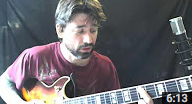
Cake by the Ocean
This is a super fun riff to play from the DNCE song called Cake by the Ocean. The first part of the video shows the actual way it is played and then I show a slightly easier way.

Technique
This section explores arpeggios, scales, pull off and bending. You decide what sounds fun to work on. You may want to check out the first few seconds of each video and decide what sounds like the most fun to get started on:
Sultans of Swing
This is the arpeggio part in the solo. These are some very useful arpeggio shapes that I talk about a lot in the members section of the site.
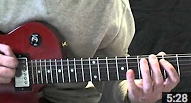
Thunderstruck - Main Riff - Pull Offs
This is the main riff from this great AC/DC song and uses pull offs and a mixolydian scale on the B string.

Metallica - fast arpeggio in fast solo
This is the beginning of the fast solo in Master of Puppets. It is relatively easy to play but it is fast and it will take some time to get it full speed. But we will discuss ways to get that happening quickly.

Riff in Sweet Child of Mine solo
This is probably the most difficult of the technique lessons I have posted. This riff is heard in a lot of solos but probably one of the most popular is in Sweet Child O Mine!
Playing and Singing
This section has songs that would be great to play and sing if that is something you are interested in. You may also just want to work on them even if you don't have interest in singing. They are listed from easiest to hardest:
I'm Yours
This lesson explores the popular I V vi IV progression (don't worry if you don't know what that means) and uses open G, D, Em and C chord. Also explains capo and bar chords.
Lesson

Cover
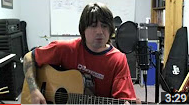
The Only Exception
This lesson also uses a capo and the popular chord forms G, Dm and C. Because of the capo we hear B, F#m and E. This lesson also explores strumming in 6/8 time.
Lesson

Cover
When the Night Feels my Song
This lesson is a bit more advanced. It uses bar chords and a very cool rhythm pattern that may take a bit to get used to. But once again the breakdown will get you there if you put in the time.
Lesson
Cover
Secrets
This is a fun song to play and sing by One Republic. It uses arpeggios in the verse and then a combination of open and bar chords in the chorus. The cover was done by myself and a past student.
Lesson
Cover

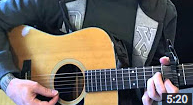
Let Her Go
This is that very popular Passenger song. It uses some tricky fingerpicking making it the hardest of the singing/playing lessons. However the strum parts while singing are not bad.
Lesson
Cover

Strumming
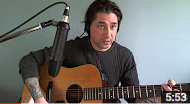
Hotel California Strum Pattern
One of a few strum patterns from this classic tune broken down
Need help choosing a lesson?
Part 1

How to Make the Most of Your Practice Time
In this first part we focus on the proper mindset for growth and the importance of the breakdown.
Part 2

The Secrets to Practicing and Getting Results
This 2nd part has us looking at the importance of staying focused on the topics we chose to work on.
Part 3

The Key to Progressing Quickly and Efficiently
The last part of this series has us looking at direction. What to practice and the order to practice it for seeing results fast!