

A Major Scale in 5 Positions
A Look at the 5 Major Scale Forms in the Key of A major/F# Minor
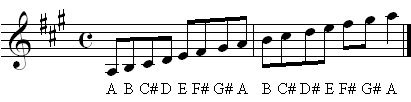
We start by building an A major scale by using the major scale formula:
W W H W W W H
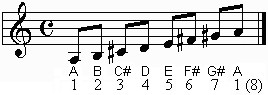
Building it on one string makes it easy to see the Whole (W) steps and Half (H) steps. Plus it is a great way to learn your fretboard and train your ear.
From this we learn that the key of A major has 3 sharps (F#, C#, G#)
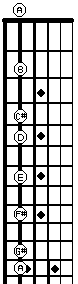
2nd Position - 1 Octave
Note: This is your 5th position C major scale form
Now let's move it up an octave higher and play it in 2nd position.
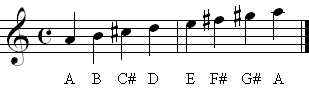
In the example below, the key signature shows the key of A major and therefore we do not need to put the accidentals (#) in front of the notes.
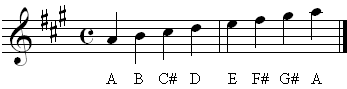
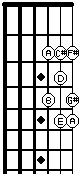
2nd Position - 2 Octaves
Note: This is your 5th position C major scale form
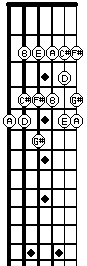
The Relative Minor - F# Minor
Every major key or scale has a relative minor
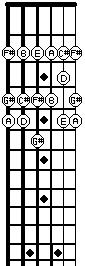
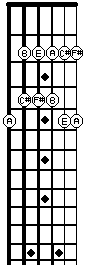
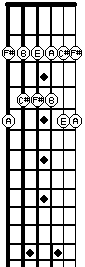
4th Position A Major
This is your 7th position C major scale form
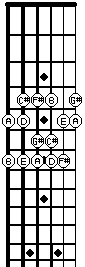
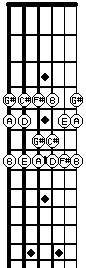
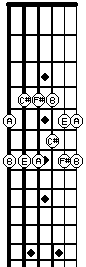
6th Position A Major
This is your 9th position C major scale form
The 6th position A major scale would be the same form as the 9th position C major scale form from Scale Lesson 20.
7th Position A Major
Important: This is not one of the 5 forms
So this is not one of the 5 forms that the is course is based on. Depending on where you are in the main lessons you may have read that some books have 7 forms. I much prefer the 5 forms and I will show you why in another lesson. However it is probably still a good idea to see the other 2 forms. This is one of them.
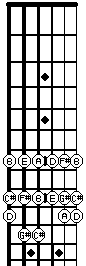
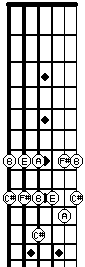
9th Position A Major
This would be your open C major scale form
This form is the same as your open C major scale form which you can find here.