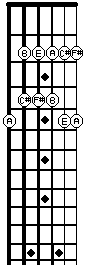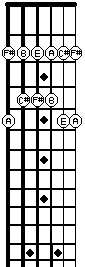
Scale Lesson 11
A Major on A String and in 2nd Position
Start by using the Major Scale Formula:
W W H W W W H
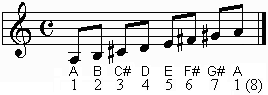
We end up with 3 sharps (F#, C#, G#)
The key of A major and its relative F# minor both have 3 sharps (F#, C#, G#)
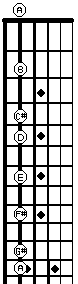
2nd Position
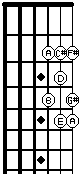
Now let's move it up an octave higher and play it in 2nd position.
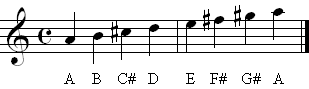
Note that the A starting this octave (2nd fret of G string) is the same pitch as the A that ended our A major scale on one string above (12th fret of A string).
These are the same pitch. Trying singing along with them. You will notice you sing the same pitch. The difference we hear in sound is called timbre (pronouned tamber) and refers to tonal colour. Because of the difference in thickness between the A string and G string, the two same pitch A's sound different. Interesting and important for learning the fretboard. We will soon recognize more and more of the same pitch notes in different places on the fretboard.
Key Signature
Key Signature
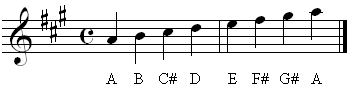
In this example the key signature shows the key of A major and therefore we do not need to put the accidentals (#) in front of the notes. This makes the notation much cleaner and easier to read. It does however mean you need to know your key signatures and scales.
Two Octaves
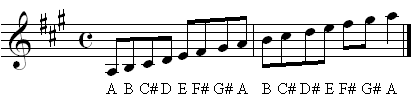
Let's play an A major scale two octaves. Instead of starting the 1st octave on the open string, let's play those same pitches in 2nd Position. You will recognize the form, it is the form you learned in Lesson 8 in the key of C with the 5th Position C Major Scale.
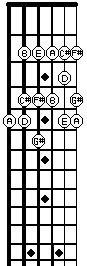
F# Minor
Play from F# to F# for an F# Minor Scale
So the key of A Major and F# Minor both have 3 sharps (F#, C#, G#)
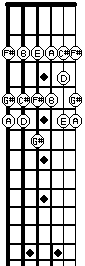
Pentatonic