|
|
Arpeggio- broken chord.
Playing one note at a time from a triad
or chord.
To learn the diatonic triads in
a key visit Chords.
Arpeggios should be a daily
part of your practice routine. They help with technique, learning
the fretboard and getting familiar with what notes belong to what
chord. Most importantly they train your ear to hear chord tones.
Below we will look at a great arpeggio for
guitar using a very familiar chord form and the art of sweep picking.
Sweep picking - sweeping across the strings with all down
or all up strokes.
|
|
|
|
|
|
|
|
|
|
|
|
|
|
|
|
|
|
|
|
|
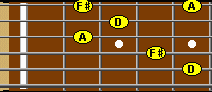
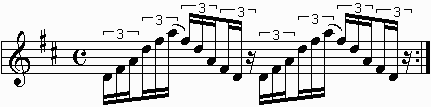
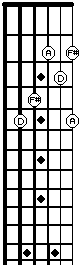
D Major Arpeggio
in 2nd Position - consisting of D, F# and A. |
|
|
|
|
|
|
|
|
|
|
|
|
|
|
|
|
|
|
|
|
|
Start by putting
your little finger on the D (5th fret of A string). Down pick and
as you drop your 3rd finger on the F# (4th fret of D string), remove
your little finger. Down pick. Continue with your 1st finger playing
the A and then 2nd finger on D and then F# with your 1st. So far each
note should be down picked. You will now turn the pick and hit the
high A (5th fret of E string) with an up. Then pull off back to your
1st finger on F#. Next up pick each note back down. |

|
|
|
|
|
|
|
|
|
|
|
|
|
|
|
|
|
|
|
|
|
 |
|
2nd position
1st finger (index) looks after the 2nd fret
2nd finger (middle) looks after the 3rd fret
3rd finger (ring) looks after the 4th fret
4th finger (little) looks after the 5th fret
|
|
|
|
|
|
|
|
|
|
|
|
|
|
|
|
|
|
|
|
|
|
|
|
|
|
|
|
|
|
|
Take
away the A on top and move the form down one whole step and you will
see your open C chord. |
|
|
|
|
|
|
|
|
|
|
|
|
|
|
|
|
|
|
|
|
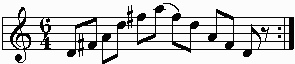
1. Quarter notes |
|
|
|
|
|
|
|
|
|
|
|
|
|
|
|
|
|
|
|
|
|
|
|
|
|
|
|
|
|
2. Eighth notes |
|
|
|
|
|
|
|
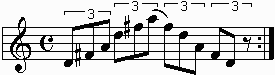
3. Eighth note triplets
|
|
|
|
|
|
|
|
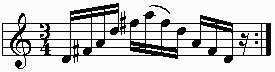
4. Sixteenth notes |
|
|
|
|
|
|
|
|
|
|
|
|
|
|
|
|
|
|
|
|
|
|
|
|
|
5. Sixteenth
note triplets |
|
|
|
|
|
|
|
|
|
|
|
|
|
|
|
|
|
|
|
|
|
|
|
|
|
|
|
|
|
|
 |
|
|
|
|
|
|
|
|
|
|
|
|
|
|
|
|
|
|
|
|
|
|
The trick to sweep picking is to play very
slow at first and gradually increase speed. We want to hear the
notes seperate. It should not sound like a chord being strummed.
One way to help with that is to remove
each finger immediately after the string is picked to keep the notes
distinct and avoid a ringing of the entire arpeggio.
Concentrate hard on keeping
your fingers close to the fretboard at all times.
Spend a few minutes daily for a week on the
D major arpeggio in 2nd position from above. The following week
move the same form to 7th position for a G major arpeggio. Gradually
move through all 12 keys.
Learn more about the 12 key signatures
and the circle of 5th, plus more great arpeggios and jam tracks
to play along with by becoming a member. Sign
Up Now!
|
|
|
|
|
|
|
|
|
|
|
|
|
|
|
|
|
|
|
|
|
|
|
|
|
|
|
|
|
|
|
|
|
|
|
|
|
|
|
|
|
|
|
|
|
|
|
For
a fun fingerpick appreggio pattern try this riff on for size.
It is a fingerpick pattern used in the 2nd and 3rd verse of
These Voices of Mine by tripfuse (musiclearning.com founder-new
band-new sound) Click
here for complete breakdown. |
|
|
|
This guitar
lesson is on myspace. Check it out!! |
|
|
|
 |
|
|
|
|
|
|
|
|
|
|
 |
|
|
|
|
|
|
|
|
|
|
|
|
|
|
|
|
|
|
|
|
|
|
|
|
|
|
|
|
|
|
|
|
|
|
|
|
|
|
|
|
|
|
|
|
|
|
|
|
|
|
|
|
|
|
|
|
|
|
More Free Arpeggio
Guitar Lessons
Metallica guitar lesson
- Solo excerpt using major and minor arpeggios with a popular chord
shape.
Tom Petty guitar lesson
- Use the D major arpeggio from above when soloing over this riff
in the key of D
Blues guitar lesson -
Try playing nothing but chord tones (arpeggios) when soloing over
the basic 12 bar blues. |
|
|
|
|
|
|
|
|
|
|
|
|
|
|
|
|